
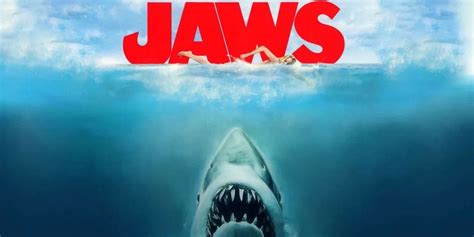
Remember those sweet summer days of long lines, salty popcorn, a dark theater and loads of thrills? Here’s a look back at one of the movies that made the summer of 1975 sizzle…and kept us out of the water!
One scorching summer in 1975, 27 year old Steven Spielberg changed the trajectory of moving-making forever when he released Jaws.
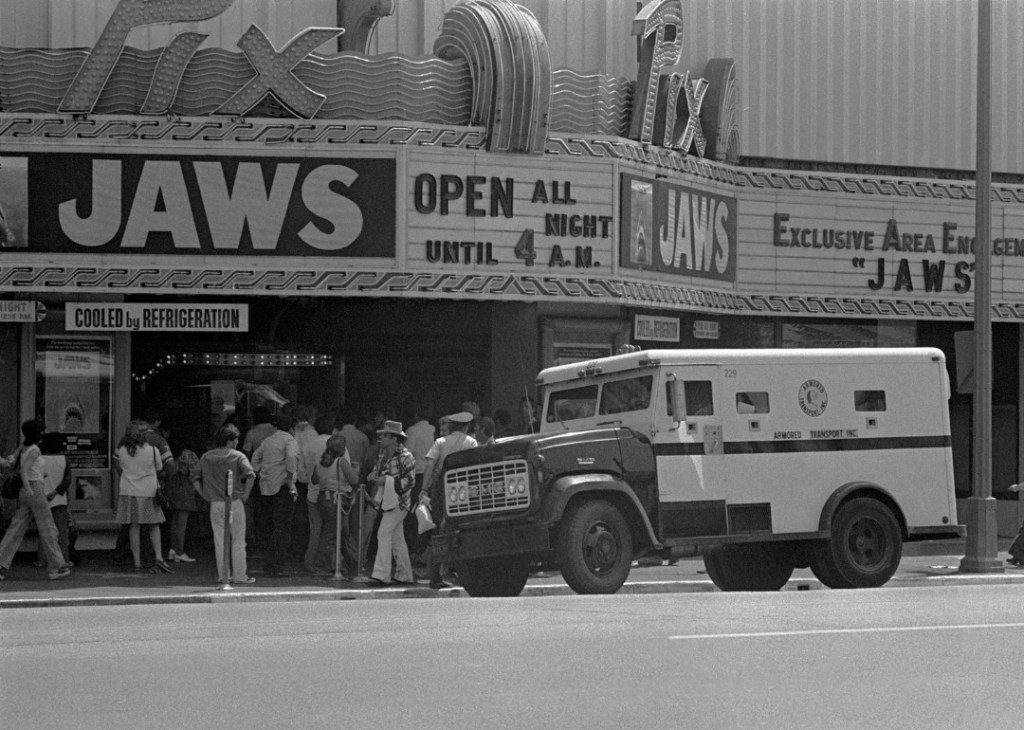
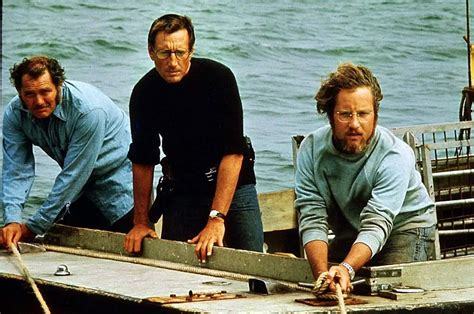
The story of a massive shark chomping on beach-goers and terrorizing a New England resort town captured the imagination of audiences everywhere. Jaws went viral via word of mouth, a spectacular marketing campaign and John Williams’ eerie score. People lined up for blocks to watch an obsessed police chief, a salty shark hunter and a nerdy marine biologist join forces to track down and destroy a murderous great white.
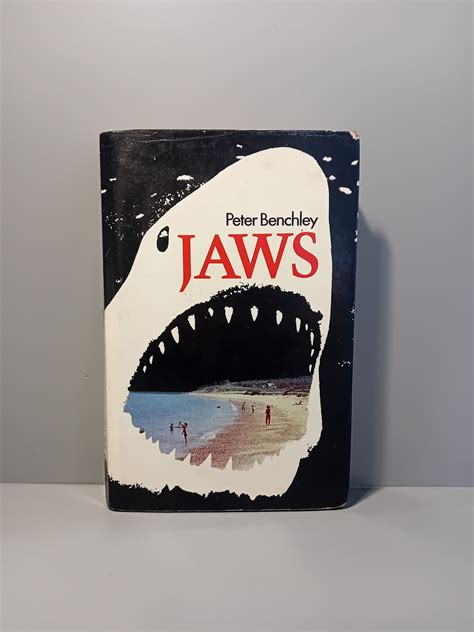
Spielberg had already created respectable buzz in the industry for The Sugarland Express (1974), his directorial debut. After garnering the best screenplay award at the Cannes Film Festival, he was ready for a new adventure. Spielberg set his sights on an adaptation on Peter Benchley’s best selling novel, Jaws.
During the summer of 1973, Spielberg’s staff began scouring for locations in New England. They settled on Martha’s Vineyard, a picturesque island better known for posh summer escapism than man-eating sharks.
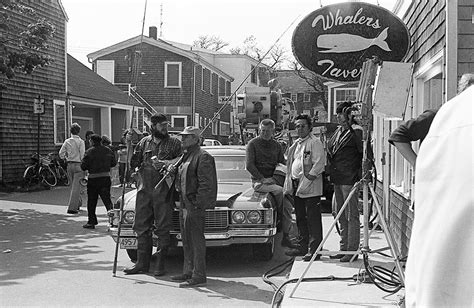
But the weather in New England is mercurial, and the reality of the problematic setting soon sunk in for Spielberg. Rapidly shifting currents and dark clouds ruined what should have been scenes of sunny Amity Island beaches. The studio wanted Spielberg to film the ocean scenes in a water tank or a lake. But Spielberg was adamant that he was going to film on the open water in the Atlantic Ocean.
“I was the only person who basically insisted that we shoot it in the Atlantic Ocean. I mean, it was insane … lake water, pond water, tank water, doesn’t have the same texture or even violence that the ocean has. And this needed to be a convincing story about a great white shark, because if it wasn’t, nobody would really believe it.”
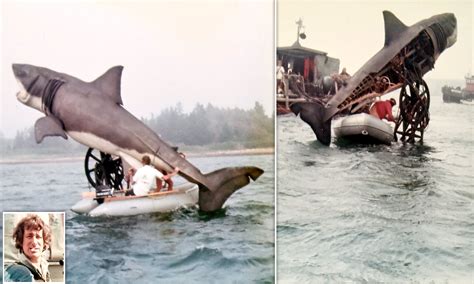
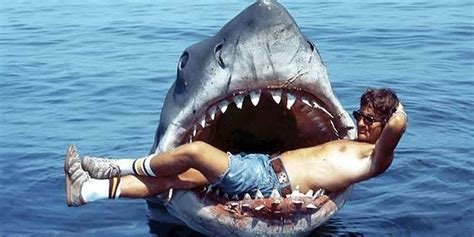
Spielberg built a massive mechanical shark – nicknamed “Bruce” – that malfunctioned so much he had to scrap plans to feature the shark more prominently in the flick.
Remember the first Jaws victim?
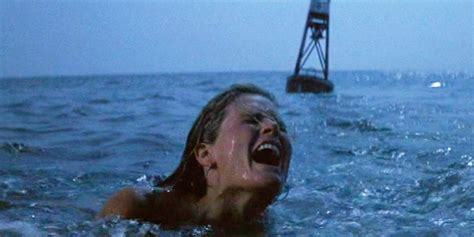
Spielberg wanted a stuntwoman for that first bloody scene, who was up to “a whole lotta shaking.” Susan Blacklinie, a professional swimmer and stuntwoman, was chosen for the task. “She had a harness on,” said Spielberg, according to the book “Spielberg, The First Ten Years,” by Laurent Bouzereau. “Five crew were on one side and five crew on the other, and they basically pulled Susan…It had to be perfectly choreographed to give the impression the shark was pulling her violently to the right and then immediately violently to the left.”
Spielberg told Blacklinie that when the scene was done, he wanted everyone under their seats with the popcorn and bubblegum.
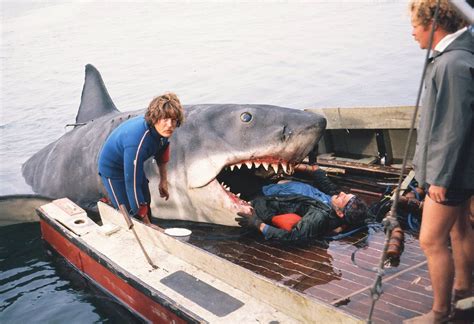
No one expected Jaws to crush box office records and create the Summer Blockbuster genre. The movie sealed Spielberg’s fate as arguably the greatest director of our time. With a budget of less than $9 million, it brought in $470 million globally. Today Jaws ranks in the top ten of highest grossing movies of all time, adjusted for inflation, and the #1 movie keeping folks out the water in the summer of 1975.


Leave a Reply